Introduction
A basement transformation represents one of the most rewarding home improvement projects you can undertake, converting underutilized storage space into valuable, functional living areas that dramatically increase your home’s usable square footage and market value. Whether you’re dealing with an unfinished concrete cave or a partially developed space that’s been relegated to holiday decoration storage, the potential for creating something remarkable lies beneath your feet.
Homeowners with basements should care deeply about this opportunity because basement renovations typically offer the highest return on investment among major home improvements, often adding 70-75% of the project cost back to your home’s value while providing immediate lifestyle benefits. Unlike room additions that require extensive permits and structural work, basement transformations work within your existing footprint, making them more cost-effective and less disruptive to daily life.
In this comprehensive guide, you’ll learn the essential steps for successful basement transformation, from addressing moisture and structural concerns to designing layouts that maximize functionality. We’ll cover everything from proper moisture mitigation techniques and insulation strategies to lighting solutions, flooring options, and creative design approaches that turn underground spaces into sought-after living areas your family will actually want to use.
Essential Pre-Planning for Basement Transformation Success
Before diving into design dreams and Pinterest boards, successful basement transformation begins with thorough assessment and planning. This foundation phase determines whether your project will be a triumph or a costly mistake that plagues you for years to come.
Structural and Systems Evaluation
Start by examining your basement’s structural integrity and existing systems. Check for foundation cracks, water damage signs, or settling issues that require professional attention. Evaluate your electrical panel’s capacity—most basement transformations require additional circuits for lighting, outlets, and potentially high-demand appliances. Similarly, assess your HVAC system’s ability to adequately heat and cool the additional living space, as basements often need supplemental climate control solutions.
Document the location of all utilities including water lines, gas lines, sewer cleanouts, and electrical panels. These elements will significantly impact your layout options and budget. Some can be relocated or concealed, but others are fixed constraints that smart design must work around rather than against.
Moisture Management: The Make-or-Break Factor
Moisture control isn’t optional—it’s the cornerstone of any successful basement transformation. Even minor moisture issues will eventually destroy finishes, create health hazards, and render your investment worthless. Begin with a comprehensive moisture assessment during different weather conditions and seasons.
Look for efflorescence (white, chalky deposits on walls), rust stains, musty odors, or any signs of previous water intrusion. Test humidity levels with a reliable hygrometer—levels consistently above 60% indicate problems that must be addressed before any finishing work begins. Professional waterproofing may be necessary, including exterior drainage improvements, interior drainage systems, or foundation repairs.
Design Principles for Maximum Basement Transformation Impact
Transforming a basement requires different design approaches than above-ground spaces. Success comes from embracing the basement’s unique characteristics while strategically addressing its limitations through thoughtful design choices.
Maximizing Natural Light and Creating Brightness
Light transforms perception more dramatically in basements than any other single factor. Start by maximizing existing natural light sources—clean and enlarge window wells, replace small windows with larger ones where possible, and use light-colored landscaping materials around exterior access points.
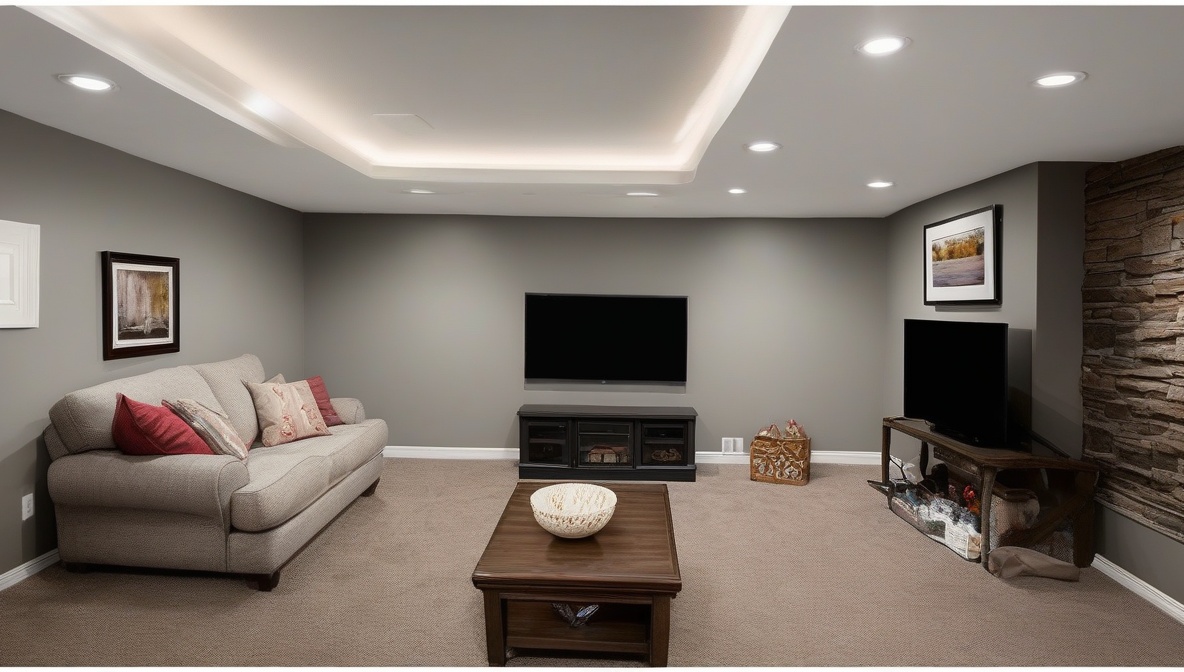
For artificial lighting, layer multiple sources rather than relying on overhead fixtures alone. Combine recessed ceiling lights for general illumination, table and floor lamps for task lighting, and LED strip lights to highlight architectural features or create ambient mood lighting. Light-colored paint on walls and ceilings can increase perceived brightness by up to 30%, making white, cream, or light gray excellent foundational choices.
Strategic Layout Planning
Effective basement transformation requires strategic space planning that accounts for low ceilings, support columns, and mechanical elements. Create distinct zones for different activities rather than trying to make one large, undefined space. Popular configurations include entertainment areas with media centers, home offices with built-in storage, guest suites with separate entrances, or multipurpose family rooms that serve various needs throughout the day.
Work with structural elements rather than fighting them—incorporate support columns into room dividers or entertainment centers, route pathways around rather than through activity areas, and position furniture to create intimate conversation spaces that feel cozy rather than cramped.
Technical Implementation: Materials and Methods
The success of your basement transformation depends heavily on selecting appropriate materials and installation methods that account for the unique basement environment. Poor material choices, even with perfect installation, will fail in basement conditions.
Flooring Solutions That Last
Basement flooring must handle potential moisture, temperature fluctuations, and the hardness of concrete subfloors. Luxury vinyl plank (LVP) flooring has become the gold standard for basement transformations because it’s completely waterproof, comfortable underfoot, and available in realistic wood and stone patterns that don’t sacrifice style for practicality.
Polished concrete offers a modern, industrial aesthetic while being virtually indestructible and moisture-proof. For areas where comfort is paramount, carpet tiles provide warmth and sound absorption while allowing easy replacement of damaged sections. Avoid traditional hardwood, laminate without waterproof cores, or ceramic tile directly on concrete, as these materials are prone to basement-specific failure modes.
Wall Systems and Insulation
Proper wall systems prevent moisture problems while providing insulation and finished surfaces for your transformed space. The most reliable approach involves installing furring strips or metal framing slightly away from foundation walls, allowing air circulation while accommodating rigid foam insulation boards.
Closed-cell spray foam insulation provides excellent moisture resistance and insulation values, though it requires professional installation and higher upfront costs. For DIY-friendly options, rigid foam boards combined with proper vapor barriers offer excellent performance when installed correctly. Always use mold-resistant drywall or alternative wall coverings specifically designed for below-grade applications.
Practical Applications: Room-by-Room Transformation Ideas
Understanding how to apply basement transformation principles to specific room types helps translate general concepts into actionable plans for your unique space and family needs.
Entertainment and Media Rooms
Basements naturally lend themselves to entertainment spaces because their below-grade location provides sound isolation and creates cozy, theater-like atmospheres. Install acoustic treatments on walls and ceilings to improve sound quality while preventing noise transfer to upper floors. Built-in seating with storage underneath maximizes functionality while custom entertainment centers can incorporate equipment storage, display areas, and concealment for wiring and components.
Consider installing a wet bar or beverage station with a small refrigerator, sink, and storage for glasses and snacks. This addition significantly increases the room’s functionality while adding substantial value to your home. Proper ventilation becomes especially important in entertainment areas where groups gather and generate additional moisture and odors.
Home Office and Study Spaces
Remote work trends make basement offices increasingly valuable, but success requires addressing specific challenges like internet connectivity, phone signal strength, and adequate lighting for computer work. Install dedicated ethernet connections for reliable internet, consider cellular signal boosters if needed, and provide abundant task lighting that reduces eye strain during long work sessions.
Built-in desks and storage solutions maximize efficiency in smaller basement spaces while creating professional backdrops for video calls. Separate office areas from other basement activities with room dividers, bookcases, or partial walls that maintain the open feel while providing acoustic and visual privacy.
Guest Suites and Bedrooms
Converting basements into guest suites requires careful attention to egress requirements, privacy concerns, and comfort factors. Most building codes require bedrooms to have emergency egress windows with minimum size requirements and sill heights—verify local requirements before finalizing plans.
Address potential noise issues from upstairs activities, plumbing, or HVAC systems through strategic sound insulation and white noise solutions. Provide adequate storage, comfortable seating beyond just sleeping areas, and consider adding a small bathroom or powder room if plumbing access allows. Temperature control becomes especially important in bedroom applications, as sleeping comfort requires precise climate management.
Budget Planning and Project Management
Successful basement transformation projects require realistic budgeting that accounts for both visible finish work and essential behind-the-scenes infrastructure improvements that ensure long-term success.
Cost Breakdown and Prioritization
Typical basement renovation costs range from $30-75 per square foot depending on finish level and complexity, with moisture control, electrical, and HVAC improvements often representing 40-50% of total project costs. Professional waterproofing can cost $3,000-15,000 depending on the extent of work required, but this investment prevents far costlier problems later.
Prioritize spending on infrastructure elements that can’t be easily upgraded later—proper moisture control, adequate electrical service, HVAC improvements, and quality insulation. Finish materials like paint, flooring, and fixtures can be upgraded over time, but foundation work, electrical panels, and plumbing rough-ins are difficult and expensive to modify after completion.
Phased Approach Benefits
Consider completing your basement transformation in phases to spread costs over time while ensuring each phase is fully functional. Start with essential infrastructure improvements, then complete one room or area at a time. This approach allows you to enjoy parts of your transformed basement while continuing work on other areas, and helps identify design preferences and usage patterns that inform later phases.
References
- EPA – Moisture Control Guidelines for Basement Renovations
- Energy Star – Basement Insulation Best Practices
- National Association of Home Builders – Remodeling ROI Data
Frequently Asked Questions
How long does a typical basement transformation take?
Most comprehensive basement transformations take 6-12 weeks depending on size, complexity, and whether major infrastructure work is required. Simple finish work on already-dry basements might take 3-4 weeks, while projects requiring waterproofing, electrical upgrades, or plumbing additions can extend to 16+ weeks.
Do I need permits for basement renovation work?
Permit requirements vary by location and scope of work, but most basement transformations require permits for electrical, plumbing, and structural changes. Adding bedrooms typically requires egress window installation and additional permits. Contact your local building department early in the planning process to understand specific requirements.
What’s the most common mistake in basement renovations?
Inadequate moisture control is by far the most common and costly mistake. Many homeowners rush to install finished surfaces without properly addressing underlying moisture issues, leading to mold, rot, and complete renovation failure within 2-3 years. Always solve moisture problems first, even if it means delaying visible improvements.
Can I do basement transformation work myself?
Many aspects of basement transformation are DIY-friendly, including painting, flooring installation, and finish carpentry. However, electrical work, plumbing, structural modifications, and waterproofing typically require professional expertise and may be required by local codes. Focus DIY efforts on finish work while hiring professionals for technical infrastructure.
How much value does basement finishing add to my home?
Well-executed basement transformations typically return 70-75% of investment costs in increased home value, with higher returns in markets where finished basement space is highly valued. The actual dollar amount varies widely by location, home value, and quality of work, but basement finishing consistently ranks among the top home improvement ROI categories.
What ceiling height is needed for basement living spaces?
Most building codes require minimum 7-foot ceiling heights for habitable rooms, though some areas allow 6’8″ in basements. Higher ceilings feel more comfortable and valuable—if you have 8+ feet, you’re in excellent shape. Lower ceilings can work but require careful design to avoid feeling cramped.
Should I install a bathroom in my finished basement?
Adding a bathroom significantly increases your basement transformation value and functionality, especially if the space will be used as a guest suite, teen hangout, or home office. However, basement bathroom installation can be complex and expensive if it requires sewage ejector pumps or extensive plumbing modifications. Evaluate costs versus benefits based on your specific usage plans and existing plumbing access.
Conclusion
A successful basement transformation represents one of the most impactful home improvements you can make, converting wasted storage space into valuable living areas that serve your family’s evolving needs while substantially increasing your home’s market value. The key to success lies in thorough planning, prioritizing infrastructure improvements over cosmetic finishes, and understanding that basement spaces require different approaches than traditional above-ground renovations.
Remember that moisture control isn’t negotiable—it’s the foundation upon which all other improvements depend. Invest in proper waterproofing, insulation, and climate control systems before focusing on finishes and decorative elements. Take time to plan layouts that work with your basement’s unique characteristics rather than fighting against structural limitations.
Whether you’re creating an entertainment space, home office, guest suite, or multipurpose family area, focus on maximizing light, creating defined activity zones, and selecting materials specifically designed for below-grade conditions. With careful planning, appropriate materials, and attention to the technical details that ensure long-term success, your basement transformation will provide decades of additional living space and enjoyment while proving to be one of your home’s most valuable improvements.